Heaven in a Wildflower: How One Scene Can Inspire Your Worldbuilding


Worldbuilding Methods 101

So, there you are.

One brave genre writer against the world, staring down yet another blank Word document like an Old West gunslinger, taunted by every scornful blink of the cursor, waiting (read: praying) for the moment your brain untangles itself and unleashes your magnum opus upon the world.

The only problem, naturally, is that your brain has absolutely no idea what that magnum opus will be.

And so you reach for worldbuilding, the universe’s greatest time sink (and arguably time waste, should you fall prey to what Brandon Sanderson refers to as Worldbuilder’s Disease). Surely, if you just figure out every last detail of your setting, the story itself will leap out like Athena from Zeus’ skull. Yes, that’s it. You just need to start by… uh… continents! Yes, continents. Or maybe the weather systems? The languages? A hundred-page hagiography of the First Prophet of the Land of Zoramesh?

I’m just being facetious now, but we’ve all been there. Worldbuilding feels safe and cozy and approachable when we’re unsure of where to start writing our story, and yet when doubt sets in, even this ostensibly leisurely activity can quickly become daunting, or even overwhelming to the point of shutting us down creatively. I suspect this is because, as flawed and mortal beings, we have a hard time figuring out how one ought to construct an entire universe from scratch.

The Bible made it look easy enough, right?

More than anything, we’re afraid that if we lay a faulty foundation, we risk the integrity of all that follows. If we mess up our world’s geographic layout, we mess up the biomes. If we mess up the biomes, we mess up the journey the characters will take. On and on and on, we worry and ponder and scrutinize, trying and failing to find a solid handhold that can serve as our anchor point and allow us to move forward with confidence.

Some writers are more than capable of using this worldbuilding method with alacrity and stunning precision. You hand them a piece of paper, and they’ll sketch out an entire planet (continents, major rivers, tectonic plates and all) like a cartographer on amphetamines. From there, they move down to “street view,” establishing cities and magic systems and minutiae galore.

Other writers start with characters, with conflicts, and construct the world around that. Once again, a totally serviceable and excellent worldbuilding method… if your brain is wired for it.

Mine is not.

Unlike these literary wizards, I am unfortunately cursed by indecision, pedantry, and self-stifling, which means I have built and discarded hundreds of seemingly intricate worlds before ever dreaming up stories or faces to populate them. (I am still awaiting my Hugo Award for Most Nitpicky Worldbuilder). Because of this, I had to spend years blundering around, wasting precious writing time, before I worked out a system that suits me. And if you are desperate enough to have found this article, it just might work for you, too.

I call it… the Vignette Method.


Vignette Method? That’s a Dumb Name.

Yes, it probably is, but I have never claimed to be good at naming things. (There is a reason my wife is in charge of the names of our pets and future children). Still, it is an apt description for the worldbuilding method I use.

In this context, I am using the following description of vignette: a brief evocative description, account, or episode. Put more simply, a scene that strikes you amid your daydreaming sessions. It could be a dialogue exchange, or a gripping image of a hangman’s hill, or even a flicker of imagination that depicts glowing white eyes. Regardless of the subgenre you call your bread and butter, you have probably been hit by many vignettes in your writing career. Many authors have described these vignettes as the seeds that begin an entire story. Here, I’ll focus on their value for worldbuilding in particular.

The method is fairly simple. Once an especially juicy vignette occurs to you, try to hold that mental image and immerse yourself in it. Try to experience it not as a static image or sound or feeling, but as a rich, textured window into another reality.

Got it? Good. Now, let’s work with it.


A Step-By-Step Guide to Vignette Worldbuilding

1. Picture yourself as an observer within that vignette.

2. Take note of as many details as you can: objects, people, phenomena.

3. Become curious about these details. How did they get there? Why are they there?

4. Each time you answer a question, look at the new questions that arise in response to that answer.

5. Extrapolate from these answers to get a feel for the broader systems, mechanics, and laws of your world.

This may sound a little too vague, but don’t worry, we’ll go through an example in the next section. Bear in mind, though, that the vagueness is somewhat intentional. After all, I promised you a more free-form, loosey-goosey method, didn’t I? For now, just focus on the core premise: the process is driven by your own interest in what you’ve witnessed.

Much like a detective encountering a crime scene for the first time, you ask yourself not only what is there, but what is absent, what is strange or out of place, what forms a pattern. By approaching worldbuilding in this manner, you sidestep the top-down model of constructing an entire universe, and instead work from the bottom up by excavating your own imagination (which is often far more creative than we give it credit for).

What drives you onward, ultimately, is the question-answer dynamic that’s spurred by your own desire to untangle the vignette. When it works, it might feel like an ever-lengthening chain, or perhaps a network expanding from a single node, or even a flashlight beam widening to illuminate more and more of a dark room.

This worldbuilding method is especially helpful for those of us who think in images or moods rather than sequential logic. If you are one of these people, you may find that your inherent “spark” or passion is snuffed out by overanalyzing, planning, comparing. To use the analogy of building a house, you start by imagining yourself inside the finished building and taking a little tour instead of sitting down to sketch out the blueprints.

Let’s get a little more specific.


An Example of Vignette Worldbuilding

The vignette that commands your attention will be highly personal, to be sure, but for the purposes of demonstration, let’s go with this vignette:

A man wearing furs and jade trinkets squats atop a cliff, looking out over a sea of swaying green trees. There’s a terrible howling in the air. The rumbling of horns. Birds wheel overhead, screeching and diving.

So, that’s our vignette. As you’ll note, it’s rather bare-bones, almost to the point of being useless. Or so it would seem. When your own vignette emerges, you’ll know it’s worthwhile because you get the sense that there is more to the scene than what initially presents itself, almost as though you’re staring down into a dark ocean, unable to see the bottom yet confident it exists. Rather than worrying about how to work this scene into a setting, take a deep breath and let it loop over and over like a gif. With each iteration, you’ll find more and more of the details that were initially either absent or hazy, producing a clearer, sharper final image. Here’s a hypothetical flow of how the worldbuilding might take shape from the example vignette:

First, I find myself drawn to the greenery (you can begin wherever you’re most curious, of course). Is it a forest or a jungle? Hmm… seems more like a jungle. Okay.

So the fur he’s wearing… oh, it’s actually a jaguar pelt. Why does he have that? Is he a hunter?

No, he seems more like a shaman. Oh, a shaman! Maybe that’s why the birds are circling. He can commune with them.

But what kind of birds? Uh… bonebeaks? No idea where the word comes from, but it seems to fit. Suddenly the birds have a shape to them. They’re huge, talon-tipped birds of prey with black eyes. Eight black eyes. Not carrion birds or hunting birds… but war birds.

Ah, yes, war birds… which might explain the horns and howling. The shaman is trying to use the bonebeaks to stop something in the jungle below. But what?

An army on the march. That feels right. There’s an army marching. But what kind of army? Why are they here?

This process can go on and on, following the trail of just about any detail until you hit the sweet spots where you intuitively feel Yes, this is what’s actually happening. You might say it’s the distinction between merely “making it up” and truly accepting it as part of this world’s reality. We have to rely on our built-in “truthometer” for this one. We have to feel whether we’re really immersing ourselves in the scene, trusting our creativity, or settling for a mindless, phone-it-in answer.

Now, keep in mind, you can always circle back and pick out another detail if you run dry on the first choice or simply feel it’s not the best launching point. Maybe you’re drawn first to the howling, or to how the air feels, or to the man’s facial expression.

Wherever your imagination wanders is perfectly okay—and naturally, don’t feel beholden to the vignette as it first appears, because oftentimes the imagination is trying to “zero in” on a specific mood, exchange, or scenario (which might explain the backlog of “Damn, that’s awesome” scenes that writers tend to assemble over time). If the vignette isn’t working for you, set it aside or jot it down. Come back to it later. I promise you’ll find fertile new avenues if you let it rest a while.


Is There Any Actual Benefit, Or…?

That’s a question you’ll have to answer for yourself. In my humble opinion, there are a few advantages to this worldbuilding method that lend themselves to better storytelling. Right off the bat, you’re getting a grasp for your fictional world as a lived reality rather than an assemblage of factoids. Every vignette tends to come prepackaged with a certain emotional tone, because otherwise, it’s doubtful your imagination would linger on it for very long. Moreover, by treating the vignette as a window into your world, you automatically imbue it with a sense of weight and direction. You get the characters, landscape, history, and lore, all compressed and presented in one snapshot. From there, it’s just a matter of untangling the data.

Adding to this point, the method emphasizes the real power of the imagination. Some of our best work happens subconsciously, not through brute-force, sweat-dripping labor. We don’t give ourselves enough credit for the depth of the worlds we dream up, simply because we don’t take the time or summon the confidence to dig deeper into what’s already present in our mind. You might say, then, that worldbuilding might better be described as world-uncovering.

Another huge plus, referring back to what I mentioned at the start of this post, is that you give yourself free rein when it comes to exploring your ideas. It’s all too easy to wind up mired in the swamps of Google Docs and Obsidian, endlessly tweaking variables and hoping our worlds magically gel… and then, inevitably, deleting or shelving projects when we find that our cobbled-together attempt has contradicted itself or requires major changes that undermine the whole thing.

Returning to the analogy of construction, worldbuilders have the unique challenge of being both the architect and the client that must be satisfied with the architect’s work… and that means sometimes making changes (or even tearing down entire sections of the building to accommodate a last-minute desire). The problem, as you’ve surely encountered, is that our own world did not form in this way, and neither did its cultures, events, languages, or cities. Our universe is a causal unfolding, not a collection of ad-hoc elements or contrivances to make a story flow better. This isn’t to say there is anything wrong with worldbuilding methods that use a bird’s-eye view, but without a doubt, much of its difficulty arises from trying to shoulder the burden of a literal god.

When we start small, the pressure is also small. If the vignette’s “spark” dries up, or if it just feels like it’s not quite the right fit for the world you hope to convey, oh well. We can just shrug and wait for another one to wander through our mind’s eye. Daydreaming is hardly as strenuous or mentally taxing as spending months of our life obsessing over fictional trade winds and tracing the etymological roots of a con-lang.

Perhaps best of all, this method is more akin to capturing lightning in a bottle than trying to play Frankenstein. I’ve known plenty of hard-working, exceptionally talented creatives who have spent years on worldbuilding bibles, only to find that they’ve worked the world out so thoroughly that they’ve stripped away all of the magic (no pun intended), and left no room for dynamic characters to puzzle over the world’s questions or explore alongside the reader. They assemble gorgeous, painstakingly detailed clockwork universes… that ultimately run best without any stories happening in them. The Vignette Method keeps the mystery alive. It helps us to remain receptive, not merely authoritative.


Miscellaneous Worldbuilding Tips

Now, I have often described myself as an “okay” worldbuilder, not a genius—I am no Frank Herbert or Scott Bakker—but through many tears and sleepless nights, I’ve managed to work out a few strategies that have served me well in my worldbuilding shenanigans. Take what helps you and discard the rest.

1. Keep at least two separate documents—one for daily brainstorming/jotting, and the other for “finalized” details that you feel comfortable committing into a “worldbuilding bible.” Test out the full implications of your worldbuilding changes before going kitchen-sink mode and throwing in everything just for the hell of it.

2. Leave room for contradictions, uncertainty, and divergent thought among your world’s inhabitants. Too many authors settle for having one religion per faction (often with just one set of agreed-upon beliefs and practices). The same issue can appear in the form of unitary (and implausibly efficient) governments or universalized mythologies. If there’s one thing sapient beings love, it’s disagreeing and splintering. Remember, a world is not experienced by the author, but by the characters.

3. Know when to stop. This relates back to the Sandersonian idea of Worldbuilder’s Disease. You truly do not need to know every single detail of every single thing in your world. Just as we often have to settle for gaps in knowledge in our own world, readers and characters may have to do the same (and most reviewers won’t crucify you for that… unless it was obviously done to avoid addressing a major plot hole!)

4. Remember that story remains paramount, and the perfect is the enemy of the good.


In Parting

Whatever method you choose for your worldbuilding, I hope you’ll keep the joy of the activity alive for yourself. Our real, fleshy universe is full of enough pressures and demands as it is; don’t let that infect your passion projects, too. At the end of the day, worldbuilding is among the more “fun” aspects of writing, and we should endeavor to keep it that way, whether we’re writing a zany space romp (ahem… shameless plug) or the darkest of grimdark.

If you’re interested in going deeper with this topic, or just want to share your experience with the method, I’m always honored to receive comments, emails, or carrier pigeon messages.

Best of luck, worldbuilders.
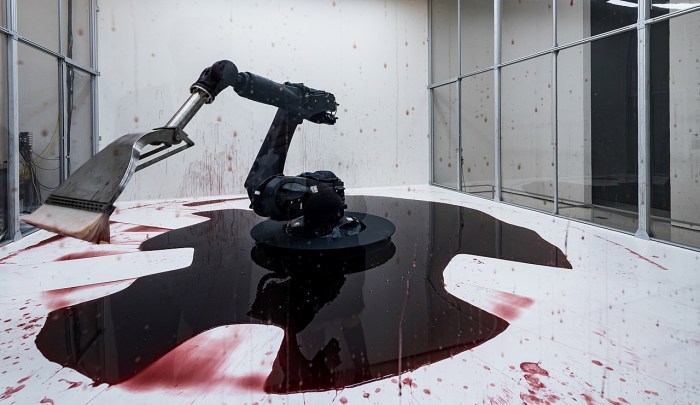
A robot sweeping up after itself, intended to show the overlap of automation and industry

Human Obsolescence in Sci-Fi: When Machines Surpass Humanity, Who Claims the Stars?

Warning: This post has strong doomer energy. (But I promise, there’s a silver lining for homo sapiens if you stick it out to the end).

We humans are stubborn. (Already, at least one reader has started thinking up an angry reply to this, inadvertently proving my point).

Our stubbornness manifests in myriad ways, but the form that is most enduring—across time, across cultures—is the dogged refusal to accept any other life as equivalent in value, let alone superior.

Sure, we might toy with the notion of all-out extinction through our beloved post-apocalyptic media… AI uprisings and nuclear winters and killer prions, oh my!… but that’s as far as we go. Toying with it. This fantasy of “the end” has come part and parcel with civilization since Sumer rose out of the holy mud.

Yet in recent years, our species has been examining another form of “the end” that, while less destructive, is just as frightening: human obsolescence. Many would claim it’s far worse, in fact, as (to rip off T.S. Eliot) it suggests humanity ending with a whimper of irrelevance instead of a hydrogen bang. And given the pride and fireworks-loving machismo that has characterized humanity since we crawled out of the caves, this is a profoundly upsetting idea to us.

Just twenty or thirty years ago, it was not uncommon (among laypeople, at least) to dream about humanity expanding across the universe, setting foot on new worlds and spreading “human values” (as though we have ever agreed on those in the first place). Maybe we were inundated by optimistic media predictions, or maybe the Cold War space race gave us an inflated sense of confidence. An exuberance that has faded in the pale light of more recent headlines. As time goes by, we’ve seen a host of changes—technological, social, cultural, and governmental—that put a real damper on our theory of humanity being the inheritor of the universe.

AI has crept into just about every industry, and it is not going away anytime soon, if ever. Funding for space missions (let alone colonization of foreign celestial bodies that offer little value) has plummeted. Our own planet is imperiled and may not make it more than a few centuries, regardless of its cause of death.

Thus, many of us have begun to earnestly wonder if our great species will become a relic, an artifact, a bunch of hapless meatbags forced to watch our own creations soar past us and colonize a galaxy that we will never get to experience firsthand. (Voyager is doing a wonderful job of that already).

And so we come to the downtrodden demographic known as sci-fi writers. When your profession seemingly revolves around trying to predict the future, you may find it very difficult to work in the current climate, especially if you are concerned with plausibility and realism for your future worlds. When confronted with overwhelming evidence of machines racing past humans, and humans themselves being sidelined to increasingly useless positions (both occupationally and existentially), it may feel harder than ever to justify why your setting has humans in the cockpit rather than supercooled mainframes.

Many of you will not feel this way, and will be happy to shrug it off and continue to plop humans everywhere and anywhere, regardless of logic, because it is simply more enjoyable and cool to tell stories that way. And to that I say… hell, yeah. I’m not the arbiter of storytelling. I’m not here to say hard sci-fi is superior to any other subgenre, or that those who spend hours pedantically, neurotically pondering humanity’s exponentially shrinking place are better than those of us who want to write about lasers and space dogfights.

But if you are one of those neurotic humans, let’s dive in.


Gods of the gaps

The blunt, painful truth is that AI already has a leg up on us when it comes to most realms of productivity. And it has a few million legs up on us when it comes to productivity in space. At root, we are fragile bags of water who evolved for one planet, one atmosphere, one gravity. Any task in space can, in theory, be done more precisely and efficiently by a silicon-based construct who doesn’t depend on pesky needs like food or water or socializing or even sanity.

We have plenty of ways to lampshade this truth. Interstellar‘s explanation (sorry to pick on it; I truly do love it, and you can ask my wife how many times I’ve cried while watching it) is among the most bafflingly lampshadey of them all, to the point that it was memed to death in online discussions and cited as the film’s most cop-out plot point. Love. That’s the missing ingredient that lets humanity survive.

For the purposes of this discussion, love=sentience=sapience, and that is the magic sauce that many authors assign to humanity. We’ll discuss that more in the next segment. For now, though, let me point out that I find it to be a weak argument, even if I am sympathetic to the philosophical importance of humans directly experiencing space rather than relying on transmitted images or data. Peter Watts’ Blindsight (please read it!) makes a fairly compelling (albeit downbeat) case against consciousness, suggesting that it is not required for survival, nor even advantageous in an evolutionary sense. In fact, it may an aberration, or even the very flaw that ends us and allows “blind” life to prosper in our absence.

Even so, it’s natural that people reach for consciousness when trying to point out why humans will win over machines. It’s the one thing that definitively separates us from them (for now). But strange as it is to say, whether AI ever truly becomes self-aware is irrelevant; many have already begun to treat it as though it is, with some people now using it as a therapist or stand-in parent. If there is a new cold war going on between machines and humanity, we are probably losing. And so we continue to find the small gaps where we can wedge ourselves in and claim to still hold dominion.

Look no further than the annoying sci-fi trope in which plucky humans outsmart superintelligent constructs by merely asking an “impossible question” or stumping them with a logic-based riddle, proving that medieval legends about “tricking the trickster” have wonderful longevity. There’s another variation in which “human creativity” radically outmaneuvers the killer AI swarm, perhaps taking the form of an unprecedented tactic like (gasp!) a barrel-roll or distraction. Very exciting to see as a human, to be sure, and it makes us want to give our species a pat on the back and start a USA-USA-USA-style chant, but there’s a difference between what is comforting and what is plausible. And the truth is probably not comforting at all.

But enough of my cheery optimism. Let’s talk about what it all means for storytelling.


The Writer’s Quandary

So, time for the awkward question.

If machines are superior to us in survival, intelligence, and efficiency, how do we justify the role of humans in far-future sci-fi?

Here, I’m not talking merely about humans existing in your setting. There are plenty of forms of obsolescence that don’t lead to annihilation. The question is more about what value or place these humans hold, and, if they are places of prominence, why we would choose an intentionally inefficient way of doing things, especially when survival or financial interests are on the line.

Put another way, why do your starships even have humans on them? If you try to make insanely high-G maneuvers with a flesh-based crew, you’re likely to wind up with flesh-based jelly floating and plastered to the walls. You need to account for all kinds of supplies and oxygen needs and artificial gravity and a thousand other variables that machines do not.

How can a faulty human brain possibly measure up to a supercomputer when it comes to calculating laser angles or intercept courses that require unimaginable amounts of data processing in a fraction of a second? What’s the use in sending a few hundred flimsy, death-prone humans to a distant planet (which, going by “real science,” will likely take centuries to reach) when we could just rely on a swarm of self-replicating nanites or industrial networks to begin terraforming the world and raising batches of embryos? Moreover, what’s the point in terraforming planets when we can build orbital habitats to host far more people with far fewer complications? Why even look at planets when asteroids and moons provide all the materials we need?

If we want to get really controversial (sorry, Starship Troopers fans) why rely on squishy, whiny human soldiers in space (much less drop them onto worthless planets) when we could utilize drones, or cross-system missiles, or X-ray penetration, or bioengineered creatures, or… I could go on, of course.

The truth is, there really isn’t a good reason.

As I mentioned previously, most of us sidestep logic or outright ignore it because it leads to some very, very good stories about our favorite type of characters (other humans). Star Wars is perhaps the most popular sci-fi franchise for a reason, laws of physics and common sense be damned. It has a low barrier to entry, lots of human drama, and stakes we care about. Great. But if we want to get into the nitty-gritty (and likely uncomfortable) discussions about humanity and its attempts to keep up with AI on the galactic stage, we need to get real.

We need to be honest and admit that most of our justifications for a human-centric future are, in the end, justifications. There’s plenty we can dish out, to be sure. Ah, maybe consciousness has some metaphysical spark that machines can’t replicate! Maybe empathy is a secret weapon against unconscious mega-networks! Maybe electromagnetic storms scramble AI! Maybe we’ve had a Butlerian Jihad a la Dune and tossed out machines for good! (If you’re interested in a complete list of how authors can reliably justify humans in a future sci-fi setting, you may want to check out my Reddit comment on the subject… but for now, let us get back to doomerism).

Ultimately, all of these excuses can work, but they are used to plaster over a truth that seems not only likely, but almost inevitable: humans, as they currently exist, will become obsolete in almost every field. Not just in fictional fields, either. It’s all over our own world. You find it on Reddit from frustrated job seekers being laid off and replaced by LLMs. You find it on the streets, quite literally, in the form of driverless taxis. You even find it in the bedroom, where some people are ditching the sweat and stank of flesh-based lovers for AI erotica.

So, that leaves us writers in an unenviable position. We have to either make up some bullshit to explain why humans are still kicking around in space/orbit/starships, or we have to relegate ourselves to a “realistic” but soulless story in which machines, not our darling, story-enabling humans, are the star players…

Or do we?


Accepting Obsolescence

Now, just for a moment, imagine dropping the pretense. Imagine sitting down to write a book in which your worst fears are realized, and humanity is swept off the leaderboards. Maybe we’re just adrift as a species, wasting away in VR servers or luxury starships while machines do all the work and exploration. Maybe we’re extinct. Maybe we’re just plain useless when measured against AI constructs that can outperform us a million times over, left to pick through tin cans and barter amongst ourselves while our overlords mindlessly expand toward Ganymede. There are plenty of variations to work with here, but the underlying premise is the same: humans are not the top dogs anymore.

At first, this might seem hopeless…

But here’s the funny paradox. In giving up hope, in no longer fighting to argue for why humanity can and must be the dominant species in your setting, you also give up fear and frustration. You give in to what is, from our anthropocentric point of view, the worst possible outcome… and amid the rubble and debris, you find (to your joy) that there are still very human stories worth telling, even if it doesn’t involve redshirts getting phaser’d to bits on an away mission.

This may sound cynical, or even heretical… but in my experience, there’s an almost liberating honesty in writing futures where humans are obsolete. Archaic. Put out to pasture, as it were. Picture a setting, bleak or otherwise, in which machines (industrial monstrosities or nanobots or stripperbots, take your pick) handle all the heavy lifting of terraforming, exploration, combat, production…

So, where does this leave us? On Earth? Languishing in post-scarcity O’Neill Cylinders? Uploaded into immortal cloud servers? I don’t know, dude. It’s your story. And that’s the point.

There’s still ample room to run if we stop trying to handwave the problem and cobble up half-baked reasons for why humanity still needs a place at the big-boy table. A galaxy with redundant humans is still full of grief, and struggles, and conflict, and all the other brutish goodness that we enjoy in our stories like proper sadists. You might have to be willing to set aside the easy or more obvious manifestations of these things, however.

Yes, there’s good fun and excitement in humans dogfighting (the Expanse’s combat is a beautiful middle ground between hard sci-fi and more conventional “pew pew in vacuum” tales), but flashy explosions and streams of autogun fire are just the tip of the iceberg when it comes to compelling conflict in sci-fi.

Take a look at 2001: A Space Odyssey, or Hyperion, or Accelerando. Compared to a lot of modern sci-fi, there’s hardly any action kicking off at any given moment… and yet the questions they raise, and the stakes they present, feel much grander and more gripping than what you’ll find in the entire canon of Marvel films or modern Star Wars. And it just so happens that these works are also very, very interested in the question of how humans and machines ought to relate to one another, if indeed they even can.

So rather than thinking of human obsolescence as inherently boring, or a dead end for your storytelling, I would urge you to examine the cracks. Find the pressure points that create tension. Look for humanity in the places where it seems the least likely to be found. There are plenty of quiet wars that don’t depend on humans fighting humans with lasers or nukes, many of them with relevance to our own lives and futures. No matter how far we go as a species, we will still grapple with questions of meaning, and identity, and belonging, and community, and loss, and ethics, and religion, and… My, we have a lot to figure out, don’t we?

(That’s good news for writers, by the way!)


Obsolescence as Narrative Fuel

We are loath to acknowledge how tenuous our position is. Not only as a species, but as workers, thinkers, lovers… as individuals competing not just with other humans, but with machines who will outperform us, if they don’t already do so. It’s uncomfortable. We generally read to escape, not to stare into the abyss (that’s what social media is for).

But this abyss is actually the unknowable fear that gives rise to great storytelling. How would it feel to watch machines swarm the Solar System, destined to colonize far-away stars and worlds while we rot here? What might we be willing to give up if it means keeping pace with machines or exploring the stars, whether it’s our “original” body, our memories, our society, our sanity, our very sense of self? At what point do we become something other than human in our attempt to escape this obsolescence? Hell, how does it feel to slowly die of radiation sickness while the onboard AI sings you lullabies, unable to help or even comfort you?

What you wind up with, if you follow the thread far enough, is a contemplation on what it means to be limited and small in a vast, uncaring, hostile universe that is not rooting for organic life or even existence, let alone one species. And that seems like a pretty damned good place to start.

Another is to take a look at the view from ground level. Instead of starting with worldbuilding interstellar empires and twenty-nine historical wars involving trillions of casualties, why not just get curious about a single person and their daily life? If they don’t have to work, what do they do with their time? How does that affect them? If they do work, what do they do, and why? Start with a close-angle zoom and pan outwards, and you’ll see that a whole world (still full of meaning and human drama) falls into place quite naturally. You may even find yourself examining large-scale systems and dynamics that you’ve glossed over in the past in a blind march toward the “rule of cool.”

Take a look at Elysium. Middling action flick, but as an allegory for class struggle and artificial scarcity fueled by the ultra-wealthy having access to high-end AI… it was brilliant. (And probably prophetic, but that’s too scary to consider before I’ve had my coffee). The humans down on the surface toil endlessly, but for what? Where are they going? What happens when the rich don’t need them whatsoever? When machines fill every possible role that humans ever could? Are they kept alive out of mercy, or to serve as slaves beneath the nobility? Things to point and laugh at? Even more unsettlingly, Elysium suggests that it’s not just machines that will make us obsolete. We humans are exceptionally good at doing it to one another already. When we watch Matt Damon slaving away in the factory, losing the last dregs of his humanity to compete with glitchy industrial bots, we see a reflection of ourselves and the world we’re wandering into. We see a portrait of change and loss.

In fact, if you look for it, you can find this same fear of obsolescence filtered through nearly infinite prisms, including loss of specialness (Ex Machina), loss of dignity (Wall-E), and loss of empathy (Blade Runner). The way we view machines is a reflection of the way we view ourselves, and what we fear from machines is often what we fear about our place in existence as a whole. Who are we when we’re not defined by labor or salaries? What should we become in a world that doesn’t need us to become anything?

The answer to these questions need not be depressing or pessimistic. They do, after all, represent a wholesale shift in the way we define ourselves. That’s not a bad thing in itself. For the first time in millennia, perhaps ever, we are faced with a “blank canvas” regarding the nature and function of human life. For some, this blankness is terrifying, and for others, it is exhilarating. Yes, machines may work faster, longer, and downright better than us… but can they contemplate their own existence better? Can they offer a warm hug to our loved ones?

It should go without saying that a living being is defined not only by productivity, but by quirks and flaws and fears and blunders. Rabbits may not be the smartest of animals, and they certainly do not produce any goods worth buying, and yet the world would be immeasurably darker without them. My wife may be clumsy, but I find that endearing. There is always beauty in the imperfections of the world. Wonder and joy cannot be captured on ROI spreadsheets or board-room projectors.

In fact, one might say that all of the depressing, existentially horrifying media I’ve mentioned in this article is a rejection of the nihilistic, misguided notion that humanity is defined by any one quality, any one capability. We were not born to work, or to fight wars, or to do anything, really. Existence precedes essence, as Sartre might say.

In that view, what we are is an active choice, not a matter of fait accompli, and the same is true for the worlds we construct. True, technology may impinge upon us, and even impinge greatly, but at no point can it ever rob us of our most fundamental gift as sapient beings: our capacity to experience, contemplate, and connect as this particular body-mind. Nobody else will ever live your life. It is a one-time viewing, an exclusive event, and that makes it priceless. Treat the inner world of your characters with the same value.


Dignity in Smallness

Maybe I am terribly wrong, and humanity will inherit the stars as surely as we inherited the Earth’s skies and oceans (just, you know, not the deep oceans). Maybe we will invent a breakthrough that allows us to go faster than light, or place people in “cryosleep” without rupturing their brains, or find a way to upload minds that doesn’t just create a binary-based philosophical zombie.

Maybe.

I am not here to make sweeping predictions about the future of our species. My goal is smaller and humbler. I ask you, as an author, to consider that whether the galaxy at large is colonized by organic life or silicon, there will always be stories to share, and real stakes to explore. The question isn’t whether we’ll become obsolete, but what we might lose or even gain if such a thing happens, and how those losses alter what it means to be human.

Your fictional victims of this loss may be embryos packed aboard a colony ship, or wastrels living out their immortality in VR, or anything in between, but what matters is how deeply you investigate one question: what would it be like to experience that?

By dwelling on that loss long enough, you may start to see all the new beginnings that emerge from the same ground. The new ways of thinking and imagining and connecting that we have buried for so long in our mad dash to be worker drones. Understandably, many of us will be afraid of (and even hurt by) seeing our labor or passion projects dropped into the hands of AI. But we’re still here, aren’t we? We still have minds and dreams and desires, and plenty of other humans in the same boat who demand our attention and compassion. In obsolescence, there is change, and in change, there is freedom. Lean into that. Find yourself in the questioning.

Or, you know, you can write about laser dogfights. I like both.

(If you enjoyed this ramble on existentialism… or hated it… please consider checking out my trilogy Interstellar Gunrunner, which is not at all hard sci-fi and proof that I am not above giving a well-crafted middle finger to the laws of physics when appropriate).

Musings on The Path: Volume I

For better or worse, I am a writer.

All my life, I’ve attempted to use the slippery, sloppity medium of language to convey that which cannot (and will not) be constrained by language. The end result of this quest, which by its own nature is doomed to failure, is none other than a series of short, arguably manic passages detailing my thoughts on the path of “spirituality.”

There is no particular order, trajectory, or even grand purpose within these writings. More often than not, they emerge as spontaneous, meandering attempts to navigate the chaos of insight and reality.


This receiving this, this craving self, this deluded self, aggregates atop what is real and weaves a trap from which it cannot escape. It is grinded down like sandpaper, reduced to nothing and reconfigured as that which is practical and wholesome. It is lag in the system, a bug that devours RAM, a feedback loop that is too tangled up in the frantic and ultimately futile search to be rid of its own fear. Before I wished to see, the eyes were useful. Before I learned how to speak, laughter was entirely natural. Resting in vigilant equipoise, this body and mind are pacified, having been revealed as fundamentally complete and equipped, possessed of steadfastness and directness that had merely been obscured, though one cannot locate a definitive point where this obscuration arose.

All this drama of seeking and striving to be a figure of renown and praise, and for what? One, many, both, neither? I refuse to deal in absolutes, for I’m not a Sith. All knowledge is provisional. All trajectories rely on points within a boundless matrix; to get there from here and here from there relies upon wise coordination and triangulation, sailing in a sea without end. I look upon myself in a mirror, and there is a Buddha. Aha. A course has been set. It is not a course toward the thing in itself, but tastes of it come and go. Notes of its song catch my ear in a busy crowd. Course correction, bit by bit. Though I can’t find your house by GPS, I will use a map and follow the road signs, narrowing down as I approach. And thus it goes for Buddhahood. There is no other vehicle than that orientation, the display of all that arises, this mind and body. Alas, alas, the course is set.

I’ve never played Chicken in a car, but I’m learning not to swerve.


The Primordial Void imagined something other than nothing. A dream of Mind arose. Mind dreamed of subject and object. The subject dreamed of a self. The self dreamed of X. From top to bottom, a series of distinctions that appear without ever coming into being. If one balances sufficiently, they can slice through the layers to the apparent core and glimpse the No-Thing from which the chain appears to stretch. In that instant, everywhere and every time is recognized to be held in the infinite and eternal. The dream blinks out for a moment, piecing back together in an echo of birth. Dao to the one to the two to the many. To touch the Living Void, however, is not to reach the end, for there is no distinction between one’s original face and the myriad appearances. To bring the wisdom of that which empty into that which is full… Here, just here, is Buddhahood.


I’ve long since learned to stop caring which way the wind blows, but at times, the world still feels like a runaway sled on a steep hill. There is nobody home, and yet the home degrades all the same. Energy and ambition that blazes at the moment of birth gives way to a protracted demise at the hands of rote banality.

How am I to navigate samsara, colored by decay, without complaint? There are few instructions, but many warnings. I should be wary of frenzies of joy, for these are states of false exuberance, of mania. I should be wary of entertaining depressing thought, for this will cause a perpetuation of grimness. I should even be wary of leaning against my boulder and staring up at the top of my hill, and in doing so, recognizing the nature of the exhausting tedium that is maintenance of the body, which demands so much yet awards so little, and is doomed from the very instant of its beginning.

In hearing these three well-meaning warnings, I find myself in a conundrum. I cannot move forward, go backward, or stand still. The only outcome gained through pondering this is a spell of madness. And from that madness springs sanity.


The repulsion toward thought and intellect has left so many seekers feeling cognitively dissonant and dissociated, corrupting all forms of logic and analysis much in the same way we might develop a blood clot from neglecting the body

Post-realization, reality is an effortless but highly engaged tightrope walking exercise of attempting to embody wisdom as a form mirror of empty clarity… without falling off either edge. One reifies concepts into a concrete reality, and one leads to apathy and bypassing and craving the void. It’s a perfect threading, as simple as unclenching the fist yet known to the wise as the flapping of a Buddha’s arms.

The nearer one comes to full Buddhahood in the classical sense, the narrower and narrower the path becomes, with the mountain falling away steeply on either side into ground no longer visible behind the mist. You’re too high up to jump now, and you can’t step backward without losing your footing. One wobble to either side, and you either regain your balance or take a brief yet harrowing tumble until you remember to get a grip. The effortful energy, the virya, still stirs like breath or blood. The only question is what it should be used for. How it should prevent evil and ignorance from arising, near and far. Idle hands are the devil’s playthings, as they say. If not directed to that which is wholesome, it will seek out lesser pleasures, just as a fish in deep, dark waters glides toward the light of its demise.